
In the most developed state in the nation, along the southern shoreline at the mouth of the Delaware River, lays a vast expanse of productive waters, salt-marsh and forest.
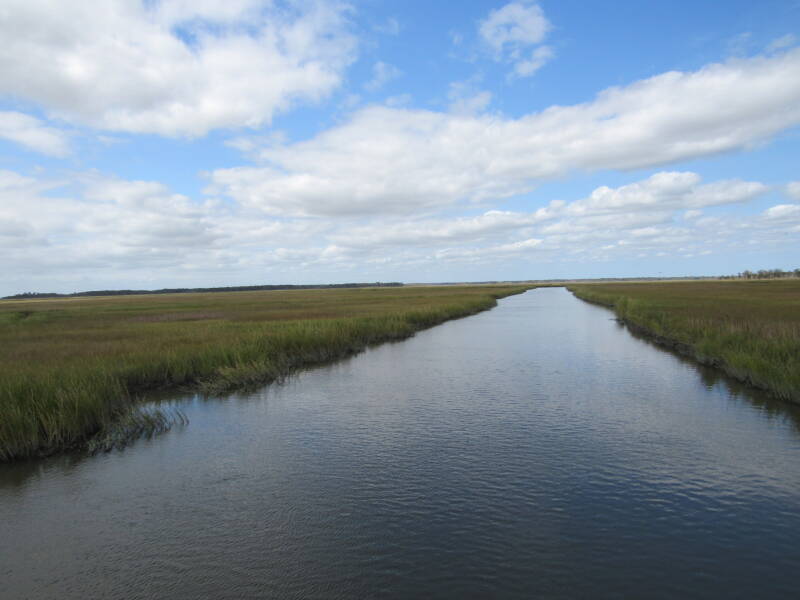
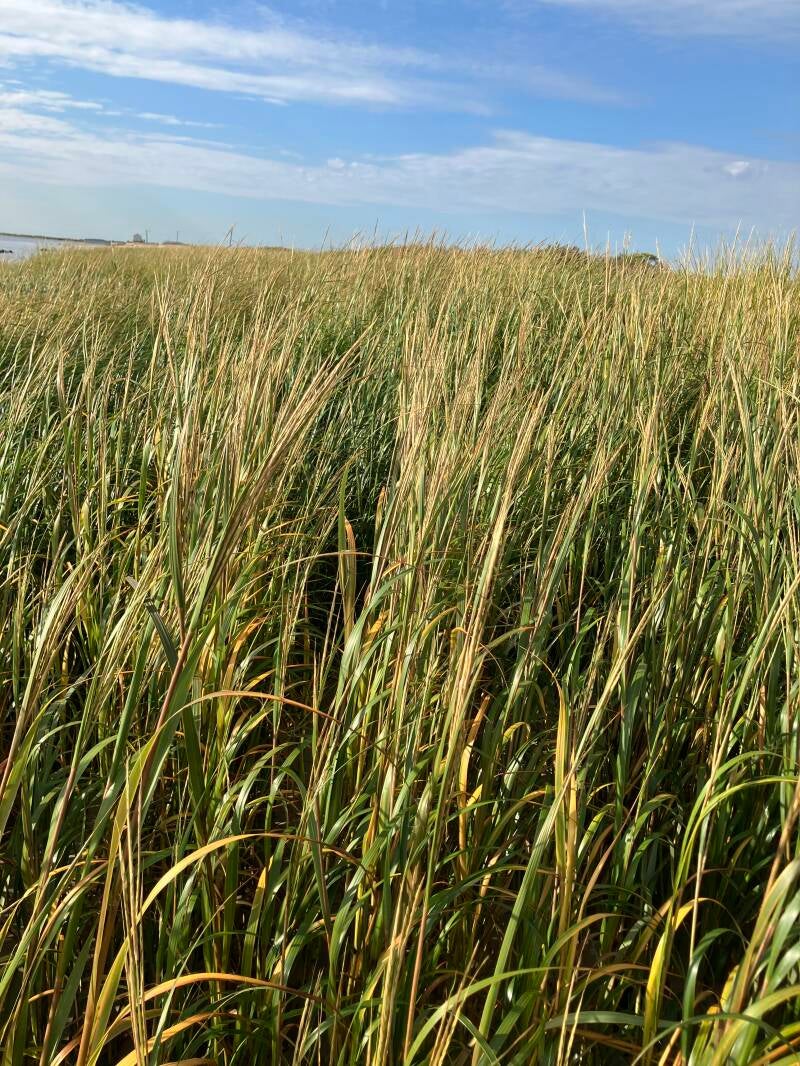
Spartina Alterniflora, a salt-water tolerant grass that has evolved to survive the bays harsh conditions, dominates the salt marshes.
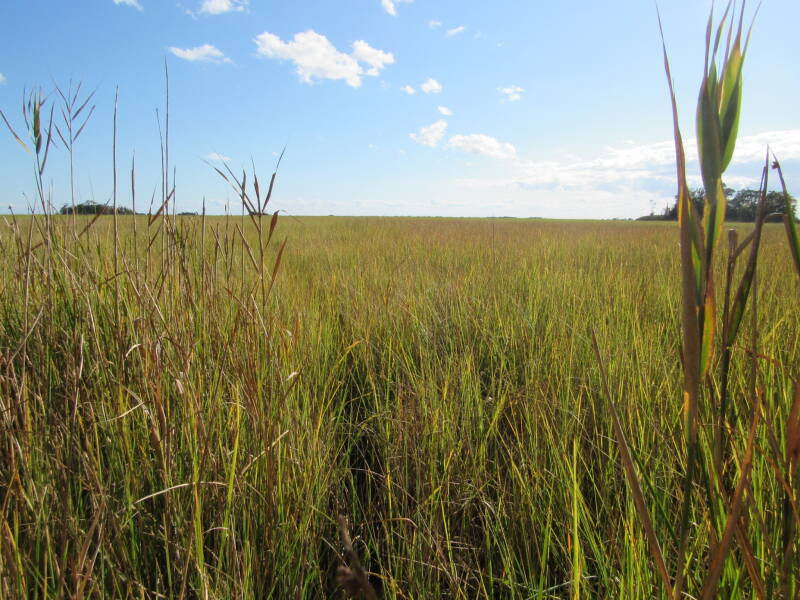
In area's inundated with tidal salt water every day Spartina Alterniflora grows in "tall form" manner (below), whereas areas only inundated during storm tides grow in a "short form" (above). Although it is harder to tell in the picture, the short form is much (much) shorter than the tall form despite being the same exact species.
This difference in height largely is thanks to the tides. The Spartina Alterniflora growing in the inter-tidal range, or where the bays salty water floods the plants (and whatever else is present) twice a day, grows as tall form Spartina. The daily water brings more nutrients and oxygen, causing the Spartina to grow much taller and less dense. On the contrary, the short form of Spartina occurs where tides reach only during exceptionally high tide events, such as storm tides. It grows much denser then the tall form, and I feel as though it more "prickly".
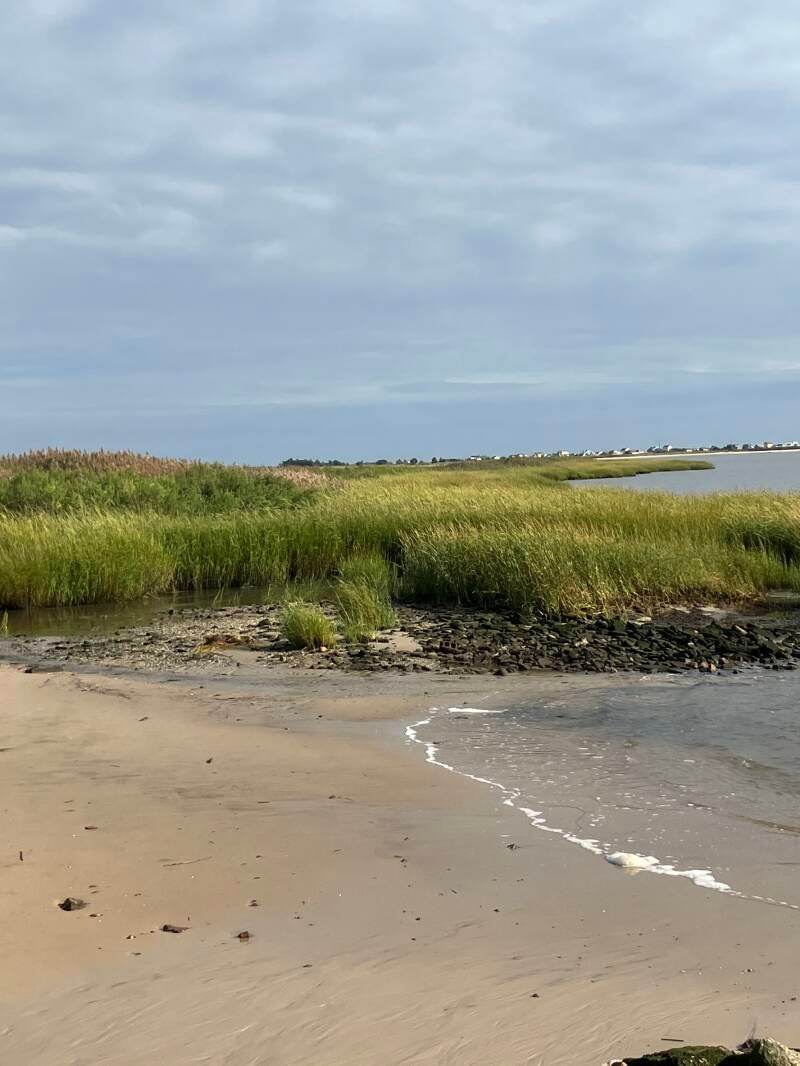
Birds for Every Season
From the famous spring shore-bird migration to winter residents, the Delaware Bay has no shortage of birds.
Summer Residents
These birds stay on the bay all summer, and will leave come winter.

Also in early summer, thousands of Horseshoe Crab's come ashore to lay their beady eggs in the sand. These eggs are a vital food source for migrating shorebirds in spring, most of which are heading all the way to the Artic from South America to breed.
Note: The author was doing Egg-Density Surveys with trained professionals, under absolutely no other circumstances should you touch the Horseshoe Crab's Egg's.
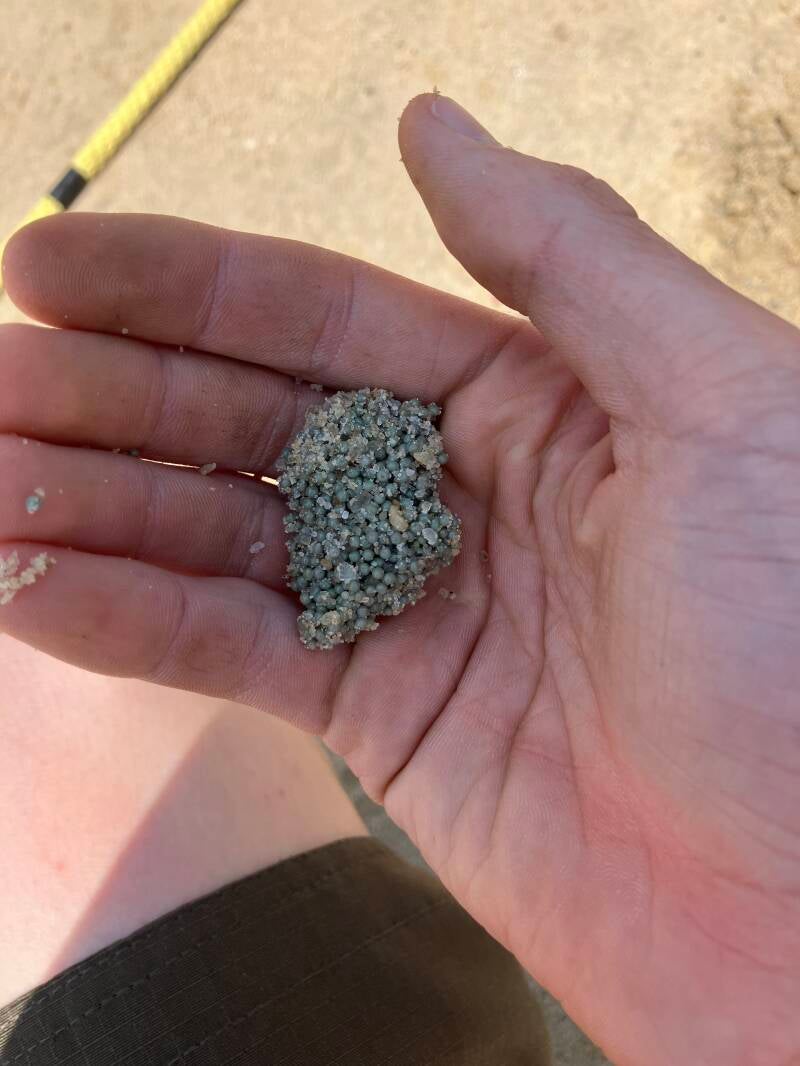
A keystone species, the Horseshoe Crab has survived for over 350 million years; and witnessed multiple mass extinctions.
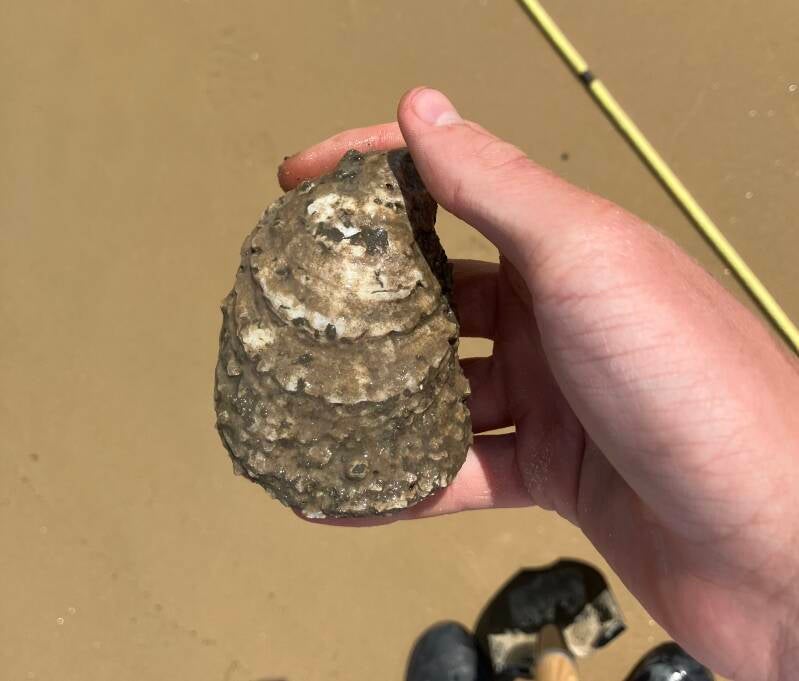
Perhaps more important for the bay than any other species are Oysters. Unlike Clams Oysters build upon other, creating massive reefs inviting to all forms of aquatic life. They are also filter feeders and quite literally filter the water while "sucking out" small creatures such as phytoplankton to eat. They were also harvested at an enormous scale in boom towns such as Port Norris until the 1950's, which is when MSX (a disease) decimated their population. Recovery efforts are finally showing an increase in population size, however it is nothing still compared to pre-msx levels. I was very lucky to see this live oyster floating around the shore one day.

If you would like to visit the Delaware Bay there are plenty of not only Wildlife Management Area's, but also privately owned nature sanctuaries, coastal communities and marinas open to the public.


Add comment
Comments