

Native Plants for Birds
Mason Cain
Run by Mason Cain, the goal of the Free Native Seed Project is to replace as much lawn as possible with native plants; for free.


Only addresses from NJ, PA and DE will be accepted. Maximum order size 5 packets.
Shipping and seeds are free!
If you got to school with me please, put your locker number in the comments section! I will leave the seeds in there.
If you do not get a response to your order please email me directly, there may have been an error on my end!
2 Dec 2025 09:06
Mason Cain
Conservation in much of America, defined as the "prevention of the wasteful use of a resource", is often allocated to state and federal governments in the form of public lands. Although these are in-arguably priceless for conservation and wildlife, they are disconnected. From the perspective of wildlife, we will say a Monarch Butterfly, there can easily be 10, 20, even 30 miles of hostile territory between these protected area's. If our Butterfly is unfortunate enough to be traveling through a developed area then chances are the hostile territory it needs to traverse is...
We are quick to make fun of colonial people for wearing bigger wigs as they got richer, but we are not so different. Now, as opposed to increasing our wig size as we make more money, we just increase the size of our lawns. The biggest and most sought after houses have big, sought after lawns. This is obvious to most people, so why am I even pointing it out?
Lawn's occupy over 40 million acres of American soil, which is insane. For reference, New Jersey is 4 million acres. Lawns even occupy more land than Florida, which comes in at just under 35 million acres. By definition, lawns are our nations largest irrigated crop.
Yet, we do not get any food from them. Actually, we do not get any sort of natural resources from them. Yet, while rivers such as the Rio Grande are being depleted faster then they can refill, we dump enough water on them each year to fill the Chesapeake Bay. The fertilizers and pesticides we apply to them contribute even further to the degradation of our environment, while we do not even get anything from them. Although it's true some are used for recreation, the majority are simply for looks.
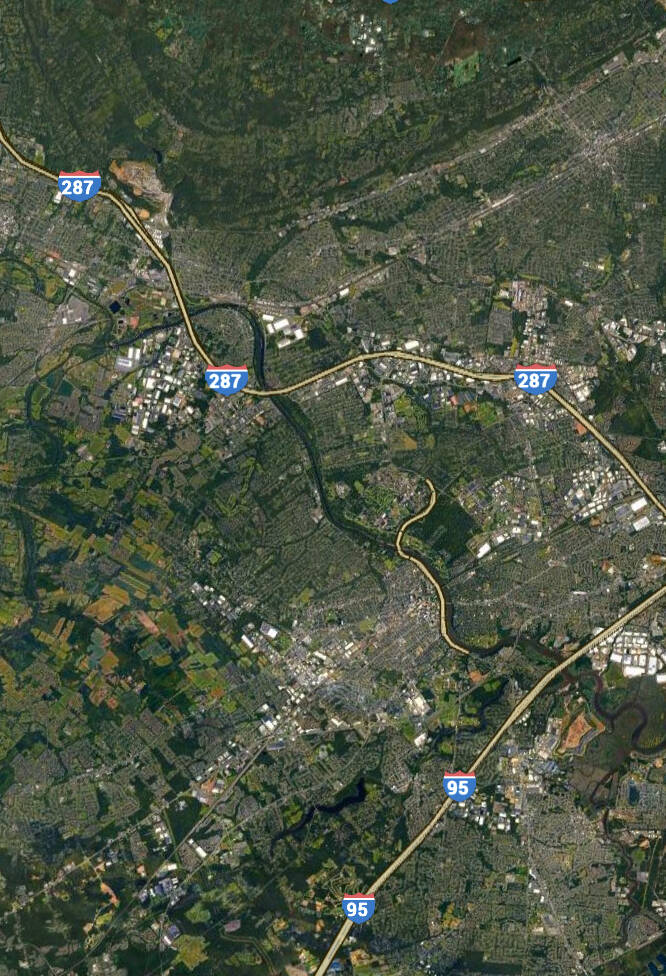
The suburban habitat that many species of wildlife are struggling to traverse.
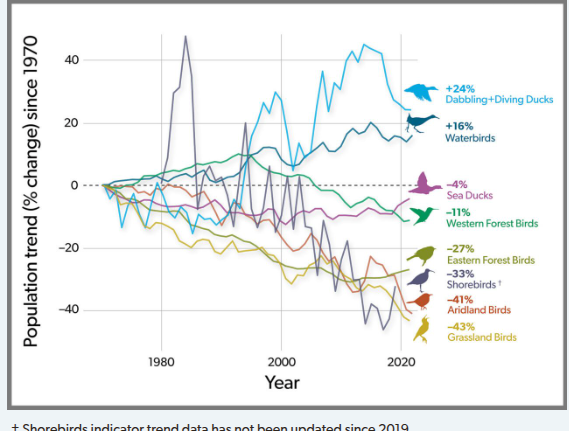
Since 1970 Grassland Bird species have declined by 43% largely thanks to development/agricultural conversion and woody-intrusion, the highest amount of any species.
Replacing lawn with native grassland species is a great way to help these birds without losing housing or farmland.
Aridland birds have decreased by 41% since 1970. Returning developed, water-thirsty lawns in the desert to native desert flora is a necessity for our desert fauna.
Butterfly populations have dropped by 20% in the U.S since 2000, or about 1% per year. At that rate only the most resilient will be left by the end of the century, potentially in your lifetime. Monarch Butterfly populations have decreased by over 80% since the 1990s! Perhaps more so than any species butterflies depend on native plants, and even replacing 1/4 of an American lawn with native plants will provide 10 million acres of vital habitat. North America has about 4,000 known species of bees, ~2,500 need more research done before making any conclusions. Lawn does not provide nectar for these vital pollinators, many native and non-native flowers do however.
Even if everyone in the U.S restored 10% of their lawn to native habitat this would create 4 million acres of wildlife habitat, an in-arguably massive conservation win.
2 Dec 2025 09:06
Mason Cain
Here is a form you can fill out to donate seeds to the program! Seeds must be native to NJ, DE and/or PA, and other than that I will take it on a case by case basis.