
In the most developed state in the nation, along the southern shoreline at the mouth of the Delaware River, lays a vast expanse of productive farms, forest, waters and salt-marsh. The views are world class, and the wildlife is something many take for granted. However, it is a system under strain as well. Human development, past and present, has taken its toll, and the effects of climate change are easy to see. This page of the site attempts to bring to light this incredible ecosystem, culture and the communities that make it up.
THIS blog IS A WORK IN PROGRESS/ being transferred to the Delaware Bay page of the website!
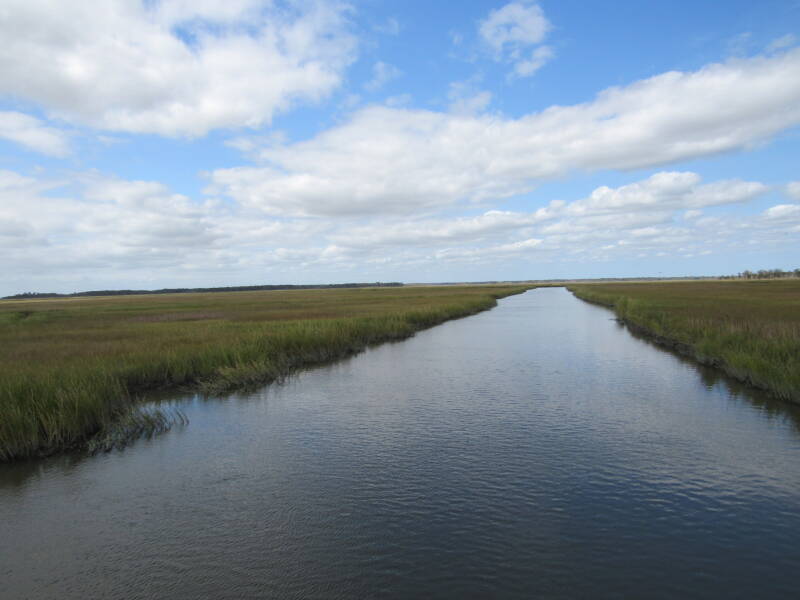
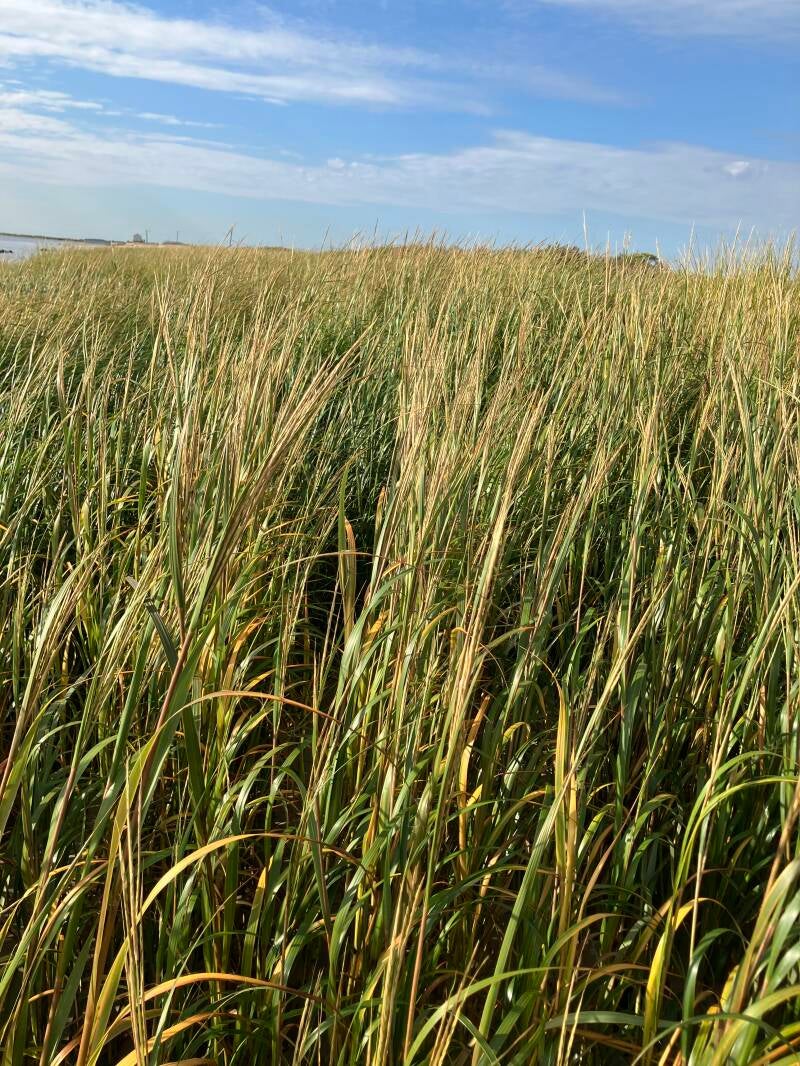
Spartina Alterniflora, a salt-water tolerant grass that has evolved to survive the bays harsh conditions, dominates the salt marshes.
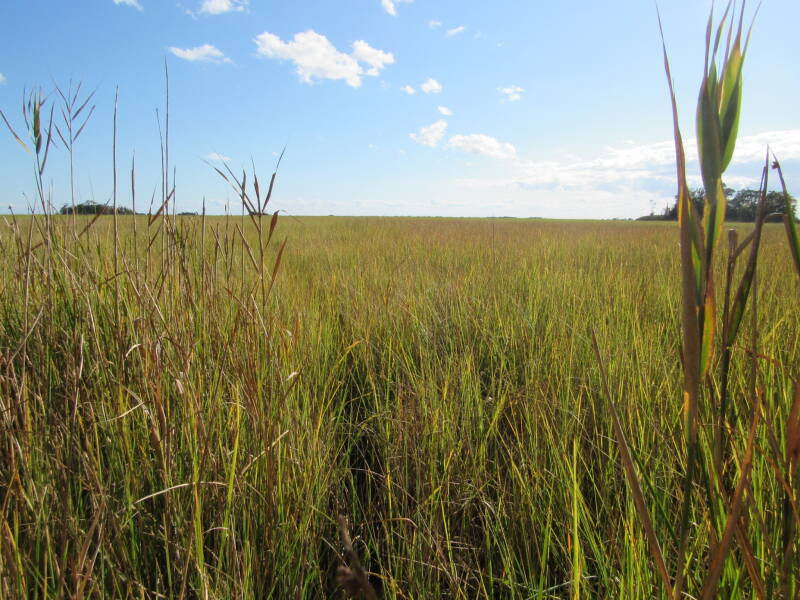
In area's inundated with tidal salt water every day Spartina Alterniflora grows in "tall form" manner (below), whereas areas only inundated during storm tides grow in a "short form" (above). Although it is harder to tell in the picture, the short form is much (much) shorter than the tall form despite being the same exact species.
This difference in height largely is thanks to the tides. The Spartina Alterniflora growing in the inter-tidal range, or where the bays salty water floods the plants (and whatever else is present) twice a day, grows as tall form Spartina. The daily water brings more nutrients and oxygen, causing the Spartina to grow much taller and less dense. On the contrary, the short form of Spartina occurs where tides reach only during exceptionally high tide events, such as storm tides. It grows much denser then the tall form, and I feel as though it more "prickly".
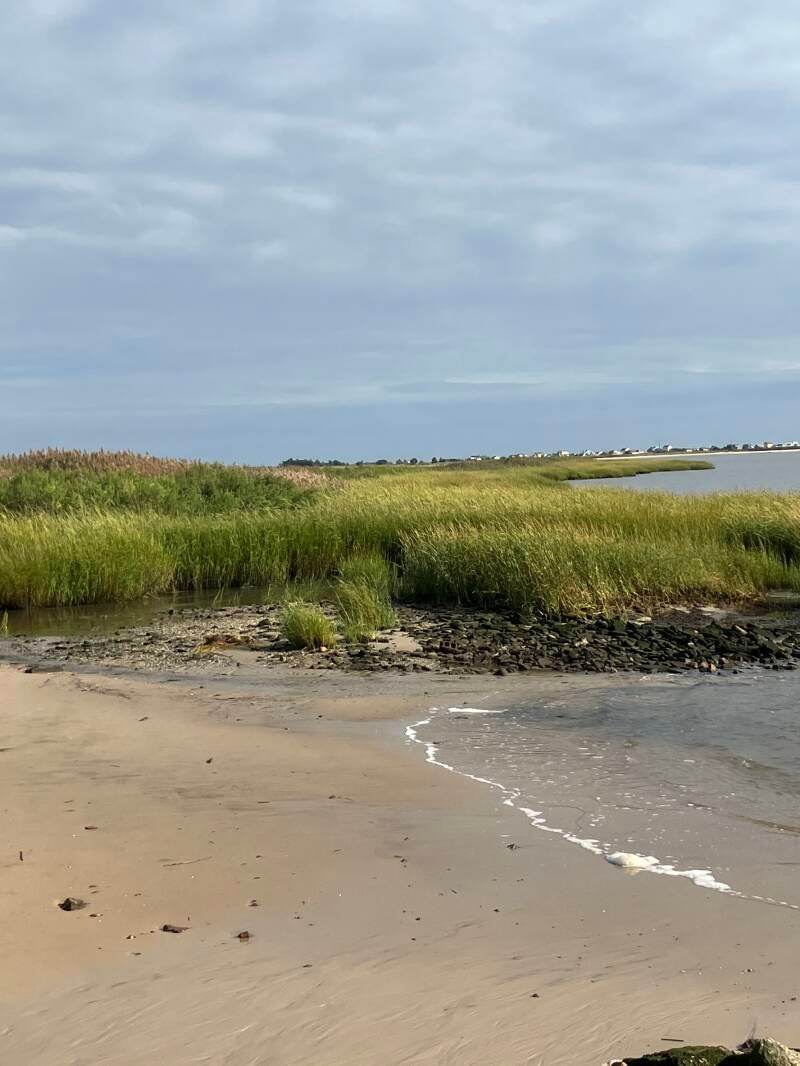
Horse Shoe Crabs!
In early summer thousands of Horseshoe Crab's come ashore to lay their beady eggs in the sand of the Delaware Bay. They wait until the water hits 59 degrees fahrenheit, and come ashore in waves of living fossils. Quite literally actually. They follow the tides, especially the new moon spring tides (which are much higher), onto beaches along the Delaware and New Jersey coast. Once on the beach they breed and then catch the next tide out. In fact, assuming they keep their book gill's moist, they can only survive out of the water for 24-48 hours, a very slim margin of error to catch the next tide (which changes every 12 hours). Here is some more information on these incredible animals.
Note: The author was doing Egg-Density Surveys with trained professionals, under absolutely no other circumstances should you touch the Horseshoe Crab's Egg's.
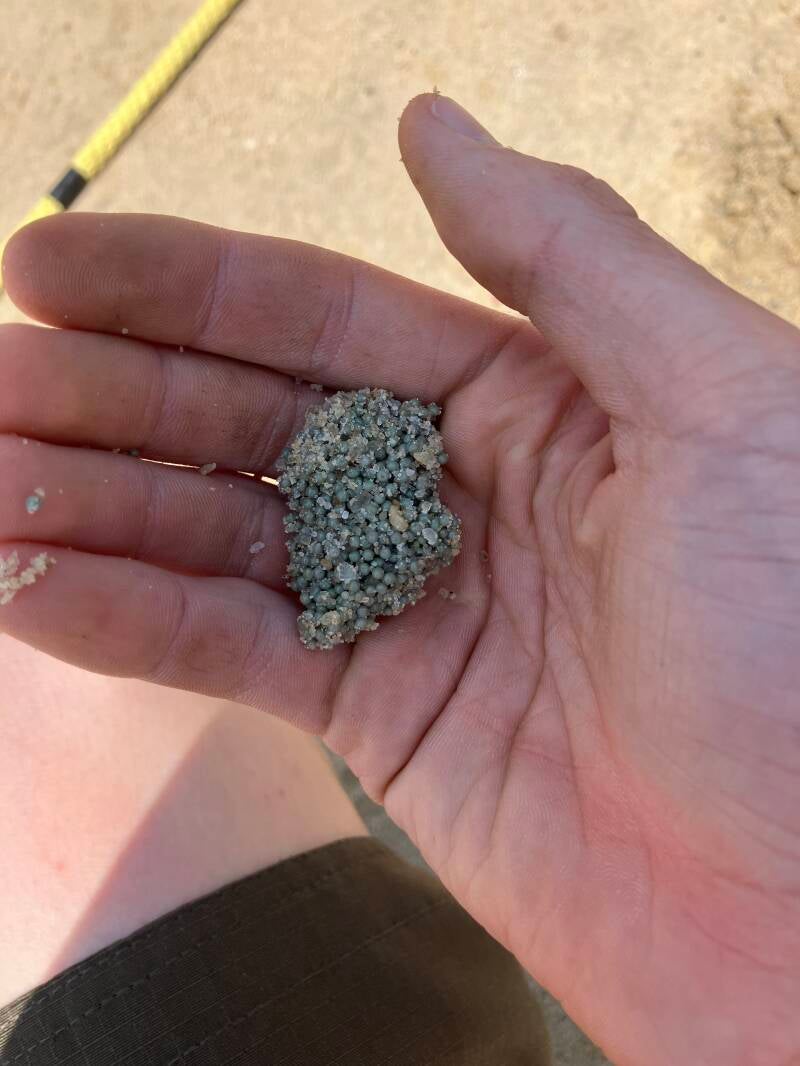
Living Fossil
Technically there can be no such thing as a living fossil, as fossils are mineralized "things" and nothing transformed into to pure rock can live. However, if it was possible the award would go to Horseshoe Crabs. They have been miraculously unchanged for the past 300 million years, which is unheard of in species. To put into perspective how remarkable that is, dinosaurs existed from 245-66 million years ago. They have outlived dinosaurs! Now somehow the largest concentration of them, especially that of the Atlantic Horseshoe Crab, exist in the Delaware Bay. Yes, they appear along the whole east coast; but not in the beach clogging numbers seen here. The shallow, quickly warming waters that lead to sandy, gently sloping beaches of the Delaware Bay hold the largest spawning concentration of Atlantic Horseshoe Crabs in the world during a natural phenomenon every spring.
Breeding On the Delaware Bay
As I already mentioned every summer (technically late spring) when the waters of the bay warm to 59 degrees thousands upon thousands of crabs come out from the depths of the Delaware Bay onto the beach in tide-dependent masses. They have one goal; to breed. The females come out from the water carrying tens of thousands of eggs in, yes in, their head. They will deposit portions of these eggs small holes near the inter-tidal line (ideally). The females lay 3,000-10,000 egg each time, and can lay around 100,000 eggs over the course of their mating season (about May-June). Male Horseshoe Crabs will follow the female, or even clamp onto her, so they can release sperm on the eggs as soon as the female lays them. This is known as external fertilization, and leads to males fighting over a female (or more accurately her eggs), such as in the picture below. There are 3 main things that can happen after the eggs are laid.
The eggs can hatch, be laid in a poor site where they cannot hatch, or get eaten by some hungry creature. The first of those, hatching, will generally occur after a 2-4 week incubation period, but can vary greatly based on temperature. The amazing thing about this however? The newly hatched Horseshoe Crabs look exactly like adult ones, just much much smaller. The second possibility for the eggs, being laid in a poor location, is very much a possibilty. As the map below shows, most areas on the Delaware Bay are not "undisturbed". The "undisturbed" breeding site has coarse sand that stays oxygenated, as the bigger particles don't compress as easily and therefore leave air between the grains of sand. It also has gently sloping beaches that allow the crabs to easily access the inter-tidal line. When the eggs are laid here they stay moist but not saturated, meaning they stay oxygenated as well. The ideal sight also receives lots of sun and is relatively free of dangerous debris that can trap the crabs. The green on the map is exactly this, and is a Horseshoe Crabs dream honeymoon location. The yellow has some flaws though. Perhaps some development that impedes breeding, or even peat/salt marsh that leads right to the water with no sand. The soil of the salt marsh, peat, is anoxic (low oxygen) because it is constantly moist. That is why the salt marsh can sometimes smell like rotten eggs, as hydrogen sulfide is a byproduct of this low oxygen reaction. Any eggs laid in this peat will basically suffocate since there is not enough oxygen. The red is where there is no beach for the crabs to lay on. Along most of the red portions of the bay this is because the salt marsh runs straight into the water, but some is from bulkheads/sea walls. Now the third possibility for a recently laid egg is to be eaten, which is more complicated and important then you may have initially expected; I will explain it after going over the threats to Horseshoe Crabs
Crabs in Danger

Oysters
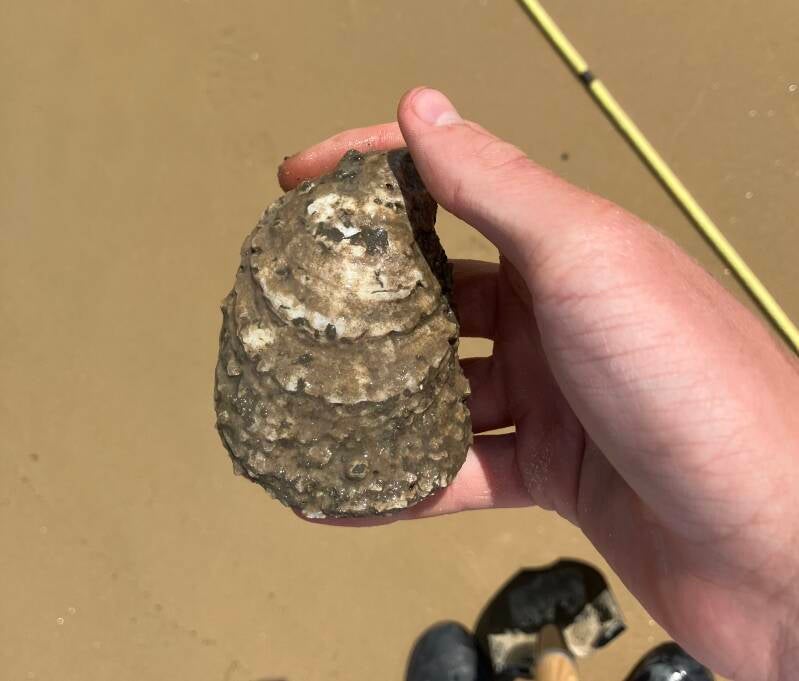
Perhaps more important for the bay than any other species are Oysters. Unlike Clams Oysters build upon other, creating massive reefs inviting to all forms of aquatic life. They are also filter feeders and quite literally filter the water while "sucking out" small creatures such as phytoplankton to eat. They were also harvested at an enormous scale in boom towns such as Port Norris until the 1950's, which is when MSX (a disease) decimated their population. Recovery efforts are finally showing an increase in population size, however it is nothing still compared to pre-msx levels. I was very lucky to see this live oyster floating around the shore one day.

If you would like to visit the Delaware Bay there are plenty of not only Wildlife Management Area's, but also privately owned nature sanctuaries, coastal communities and marinas open to the public.


Add comment
Comments