I, Mason Cain, took all of these photos on November 16th, 2025, at The Nature Conservancy's South Cape May Meadows Preserve. I was doing some birthday biking in Cape May that day, and decided I would do some hiking here on one of my stops.
Before diving (pun intended) into Bufflehead Duck's I thought I would say I was very impressed by this Preserve, and would like to go again to hike all the trails. I will say it was almost
"glamping", in the sense that there was a huge paved parking lot, informational signs, a digital touch screen kiosk with information benches and very well maintained trail's. This is not a bad thing as it made for a very relaxing experience, just not quite a "wilderness' and "isolated" one. A good amount of people were there. Nonetheless, the preserve was beautiful and mostly was dune/maritime forest habitat that faded into pristine, and undeveloped, beach.
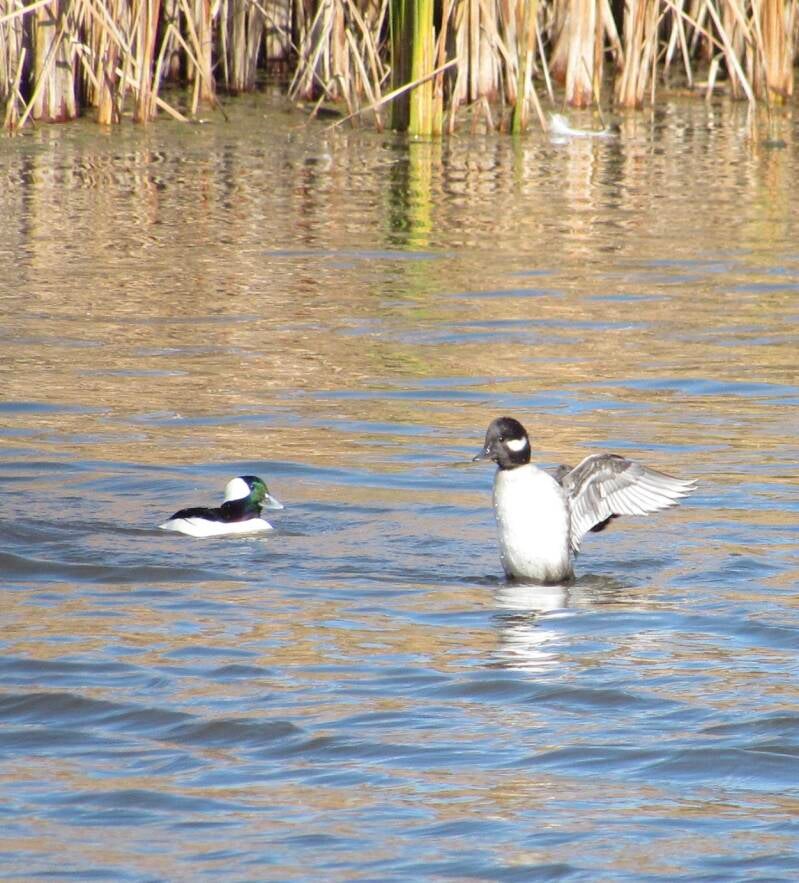
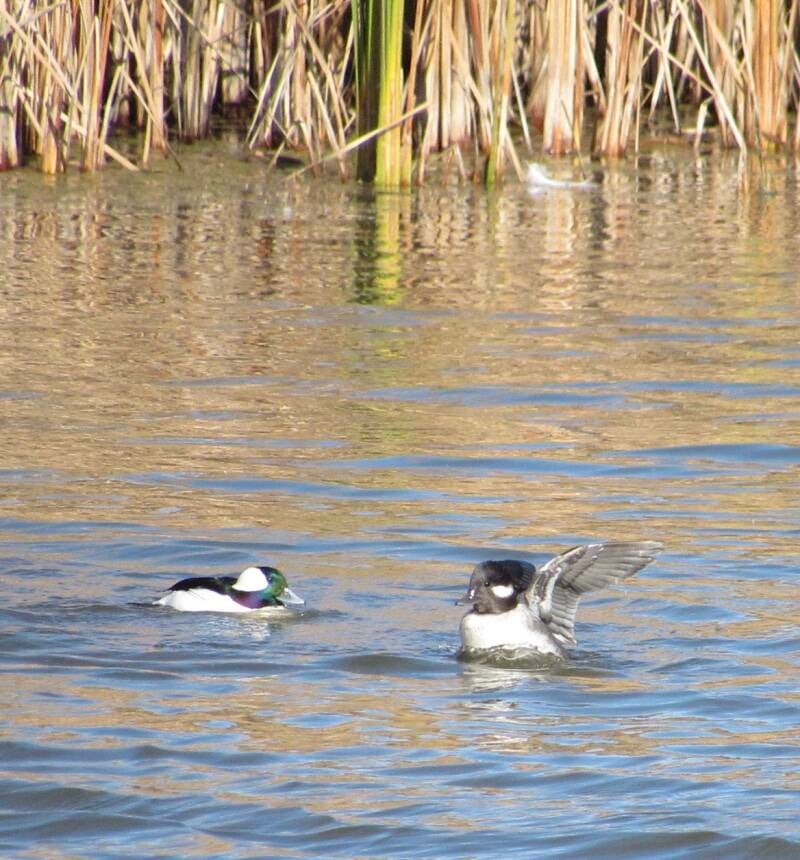
The Bufflehead Duck is North America's smallest Diving Duck, and when I saw them they seemed substantially smaller than the Mallards (another type of duck) swimming around them. This was actually what I noticed first, but quickly realized the color difference between a Mallard Duck and these still unidentified Duck's I was thrilled to have spotted. Mallards are not even North Americas biggest duck, Muscovy's are (yes we have a domesticated version of those)!

Female Bufflehead Duck
They fly north into Northern-America,and Canada, to breed every year. They nest tree cavities, such as old Northern Flicker Woodpecker holes. Northern Flickers are a huge, almost colorful and absolutely funny sounding woodpecker that can be found through much of the United States. I have been fortunate enough to see one only on one occasion.
This is an interesting example of how the decline, extirpation, and even extinction of a species can affect another; without the Northern Flickers we do not only lose an extremely charismatic Woodpecker, but also an extremely cute duck.

Each winter they will migrate south to coastal bay's, salt water ponds, rivers and tributaries. They never leave North America, but will go as far south as Texas and Mexico. Where I found them, in a pond not even a mile from the Atlantic Ocean, was text-book perfect habitat for them in winter.
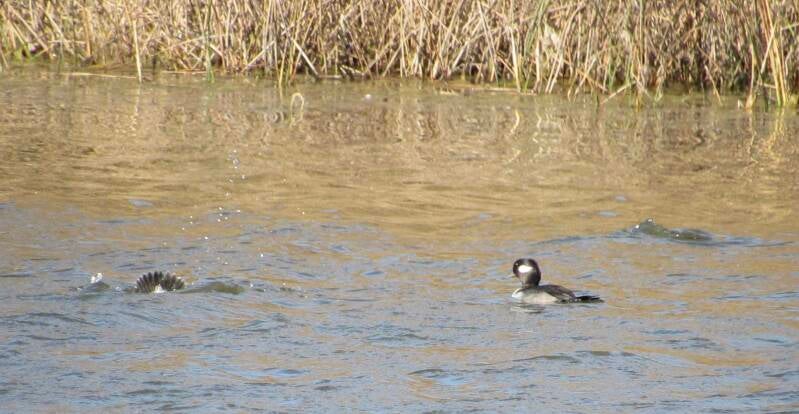
The name diving duck is accurate; they seemed to be under water for a minute at a time. Every few minutes, they dove under the water trying to find aquatic invertebrates to eat, and this made it very hard to photograph them! The Mallards were easy, as even if they went under water their butt's still bobbed up and down in the water like buoy's.

Unlike a Bufflehead, Mallards don't fully submerge. Both are searching for food underwater though. Even on cold November days their hydrophobic feathers keep them warm.
If you want to help Bufflehead Ducks be sure to help preserve, and improve, the quality of their breeding and non-breeding habitat! Advocate, and practice, responsible forestry that leaves old growth alone, and, responsibly thin's unhealthy forest (especially those made so by fire-suppression). Help restore wetlands and coastal ecosystem's, while better equipping them to adapt to climate change. Even ensuring they have safe spaces along their migration route is necessary to ensure their survival as a species!
Add comment
Comments
Great pictures and interesting information. We have Muscovy ducks here and they are pretty big!
So fascinating reading about wildlife. Much different than Washington State. Grandpa also reads your writings