Shaws Mill Pond and It’s Surrounding Habitat
I thought I would write an article on one of my favorite spots in Down Jersey, Shaws Mill Pond. A 28 acre pond, or maybe lake, popular for fishing and “boating”. Surrounding the pond is some of NJs rarest types of habitat as well. Let's settle that first, what is Shaws Mill Pond?

Shaws Mill Pond
There actually are no natural ponds in South Jersey, the soil just isn't right. When the last Ice Age came to an end the retreating glaciers carved massive divots in the bare rock underneath them, leading to ecological wonders such as the Prairie Pothole Region in the midwest. These are our true lakes, rock carved by ice into bowls perfect for holding water centuries to come. This glacier (Laurentide Ice Sheet) never extended into the Coastal Plain of New Jersey though, and our sandy/silty soil naturally settles very flat, especially as we move closer to the coast. Without human interference this loose soil, when water is dumped onto it, just stays saturated forming wetlands, or will drop in elevation just enough to have allowed streams, creeks and rivers to criss-cross our landscape. However we really like interfering with things.
The primary way we disturbed this lakeless system is by damming for industrial purposes. In Shaws Mill Pond's case it seems as though it was a grist mill in 1810, but varied in purposes over its lifetime that started in the 1760s. In 2017 it seems as though it was replaced with the current metal dam for safety purposes. However in the sandy parts of South Jersey you can also find lots of artificial ponds made by sand mining, known as “Blue Holes”. As for if this particular body of water is a pond or a lake, there really isn't a difference so long as it's over 5 acres! So we can continue to call it a pond as it was named.
Now this pond is actually great for fishing, and even just looking into the crystal clear water from the small floating dock you can see some pretty nice sized fish zipping around. NJ Fish and Wildlife also stocks it with trout every spring! Even just wading into the water on the small boat ramp you can see minnows zipping all around you, and to the left of the floating dock, and over much of the pond, aquatic vegetation such as Water Lilies dominate the water-scape.
Now for the habitat-focus of this article I will set the scene out of the freshwater of Shaws Mill, but if you want a more in-depth article on that let me know.
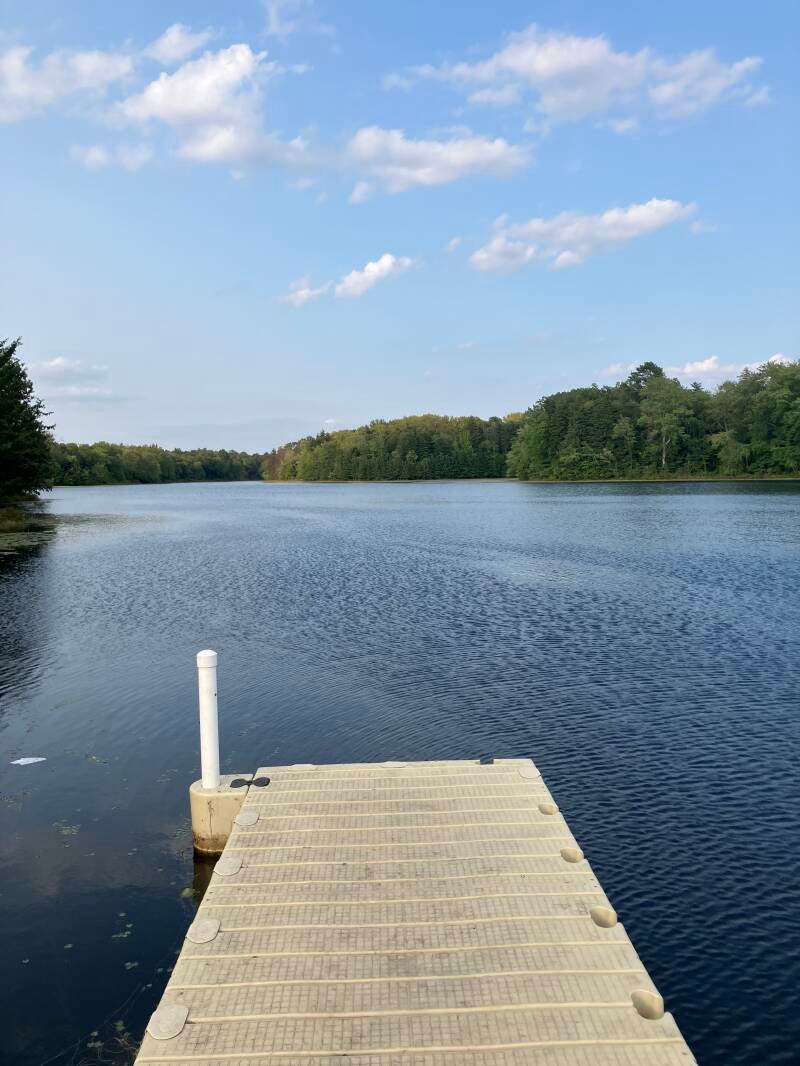
Incredible View From One of The Two Docks
Shaws Mill Pond is part of the 16,000+ acre Millville-Bevans Wildlife Management Area, owned by the NJ Fish and Wildlife. Consequently it has multiple dirt roads leading off of it to numerous different areas. The first of which is a short, winding dirt road that will eventually lead to the main road, but that is irrelevant. What is relevant is the habitat this little dirt road runs by, grassland.

The Dirt Road
Grasslands are the most endangered ecosystem in New Jersey, which is predictably not most people's first thought. What looks like an overgrown field, and in the most basic sense is an overgrown field, is actually a diminishing habitat we take for granted. Or when we do preserve simply proceed to plant trees on.
Which arguably is not what we should be doing.
Most people do not realize that the average forest in New Jersey is, in an ironic sort of way, not natural. Prior to European colonization of New Jersey, both naturally occurring and Native American fires kept our forest much thinner (extra source 1, 2). The true “natural state” of our forest is more savana like with occasional meadows that supported species such as the Heath Hen (now extinct). They were more open, and had much less trees per acre than our modern forest. However, a century of fire suppression has completely changed the composition of our forest. The fires that used to naturally occur would simply kill, or set back, this woody vegetation. For the most part they were small-medium "maintenance" fires that cleaned up our forest, instead of the completely destructive ones we see today. Our modern fires are made so big by over-stocked forests that have tons (literally) of timber ready to burn.

Small Grassland at Shaws Mill Pond
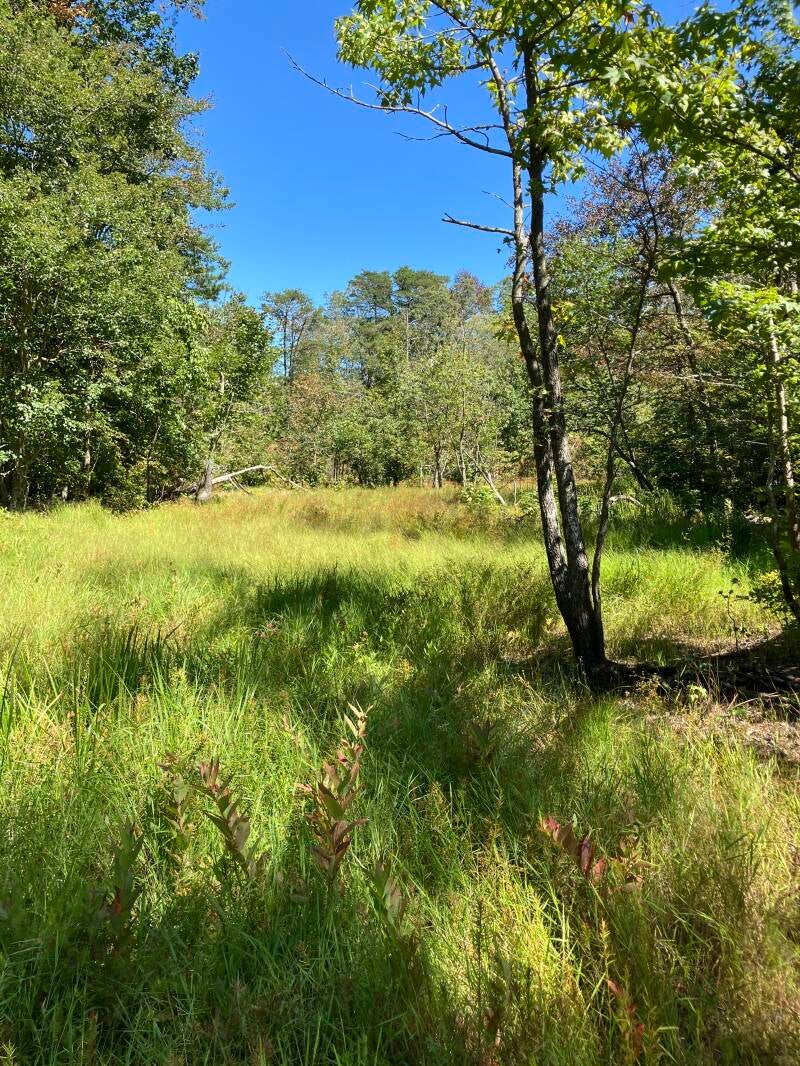
Small Savana-Like Clearing I Found in The Woods, Not Shaws Mill Pond
Grass isn’t too bothered by fire, and used to be able to grow without the fear of being choked out by woody vegetation. The woody vegetation was killed by the fires. This resulted in the majority of the NJs, and the nations, forest being much more grassy and “park-like”. The woody vegetation grew back in young, luscious spurts known as Early Successional. Early Successional habitat in a forest is simply young, new growth. Now we struggle to walk through most of the state's forest. Grassland/savana dependent species that were once abundant, such as the Bobwhite Quail, are vanishing at alarming rates as our forests grow denser and denser and our grasslands disappear.
So needless to say, having these grasslands managed as such by the NJ Fish and Wildlife is great to see. Within them, many wildflowers and grasses that cannot grow in our closed-canopy forest flourish. Raptors have a place to hunt as well. If you are a Hawk trying to find a rabbit, you will not be able to find it looking in from the top of a tree in a forest. You probably won't be able to see the ground. You need these open areas, fields, meadows and grasslands, to be able to actually see your prey scurrying on the ground. That's why Hawks also like dead trees. There are no leaves to block their view of the ground. Small sparrows have also adorned the field every time I went, jumping from Goldenrod to Goldenrod.
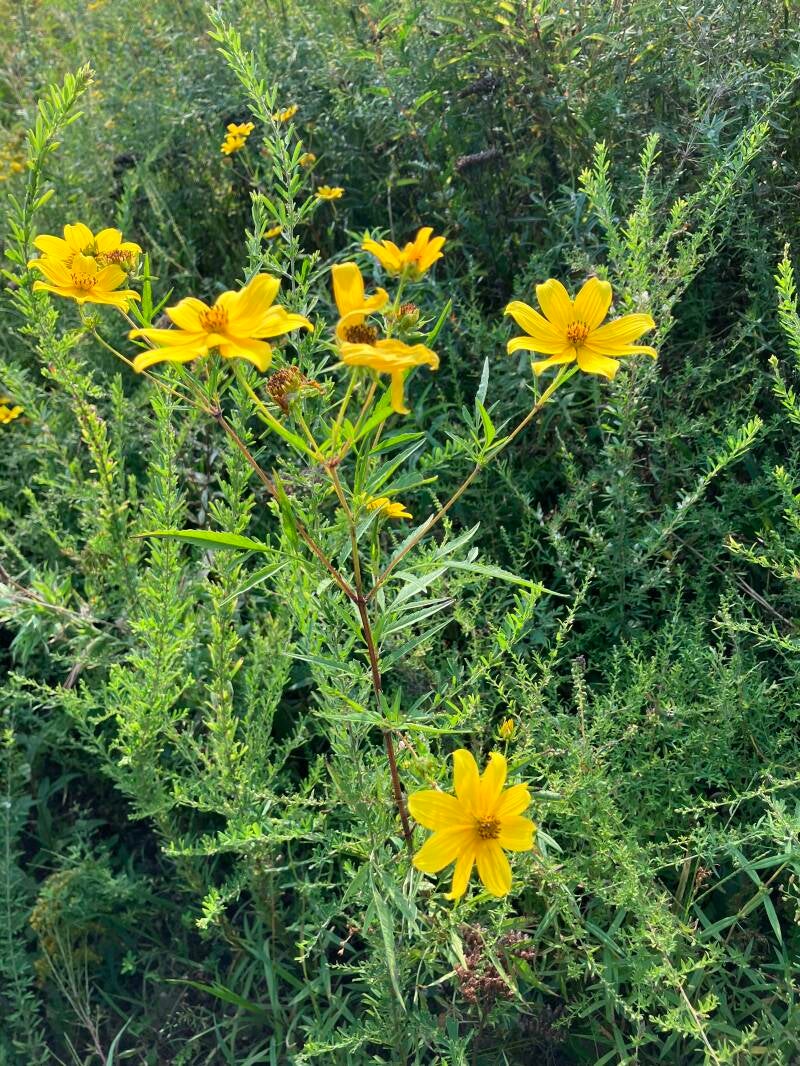
Wildflowers at Shaws Mill
This small article does not do justice to the benefits of not only managing our forest better, but also our grasslands. Beyond this small grassland there are a few more, but other than that the primary habitat is forest (which deserves its own article). However, I hope to write more about those, both the grasslands and forest, in the future. For now I hope you enjoyed an introduction to this topic, and maybe even visit Shaws Mill Pond!
Mason Cain
EDIT- I later foundthis resource on forestry in NJ, and thought I would include it! Go to page 110 to se more about the changes in forest density, the implications and solutions.
Add comment
Comments